
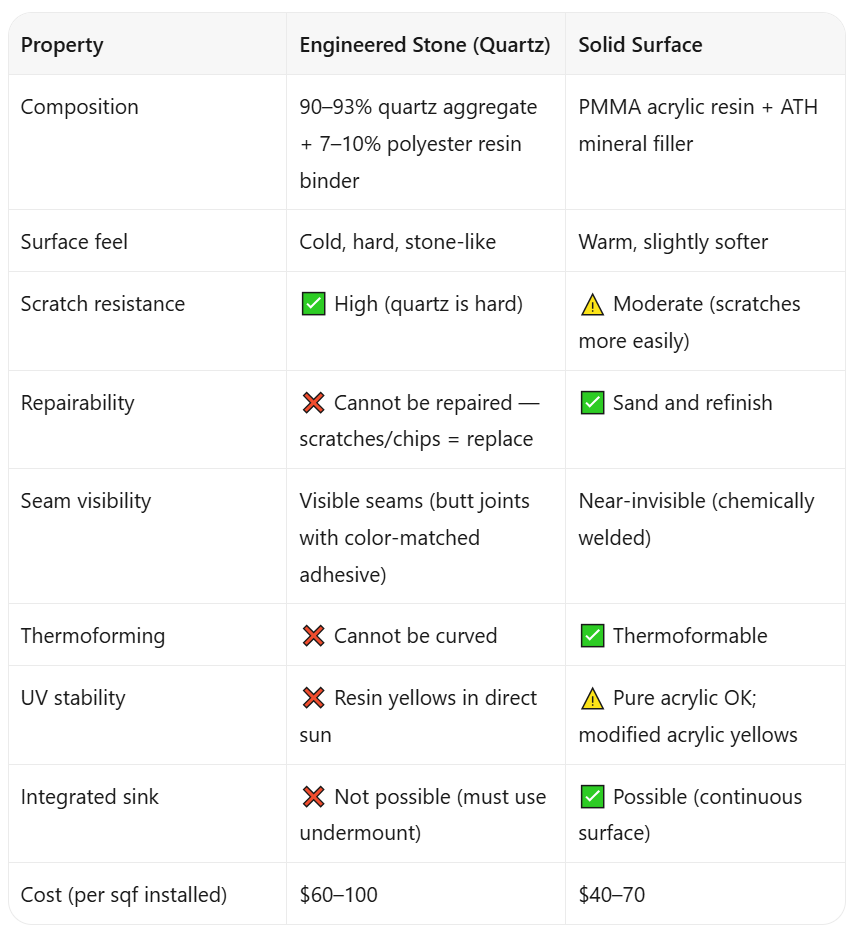
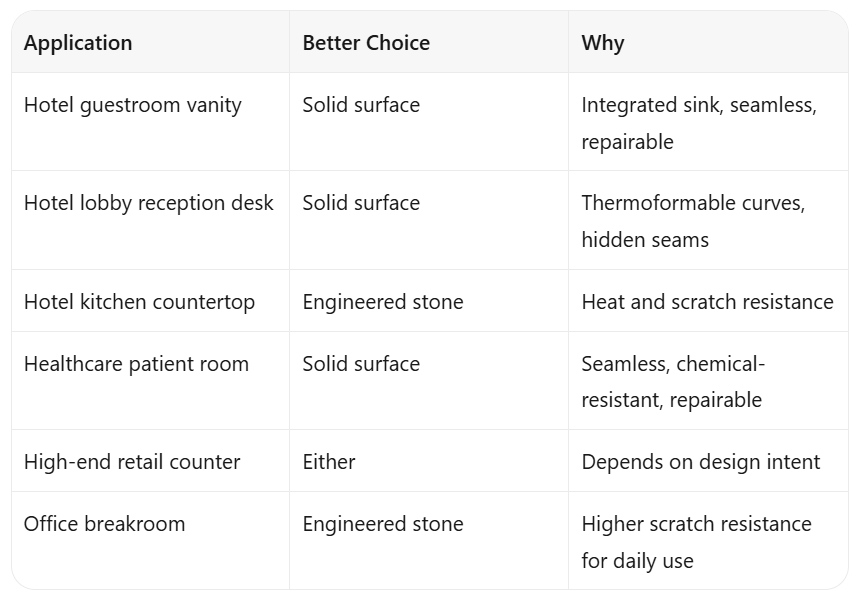
Engineered stone (quartz surfacing) and solid surface are the two dominant materials in commercial hospitality. They look similar at first glance but have fundamentally different performance profiles. Engineered stone wins on scratch resistance and perceived luxury. Solid surface wins on repairability, seamless integration, and lifecycle cost. The right choice depends on application.
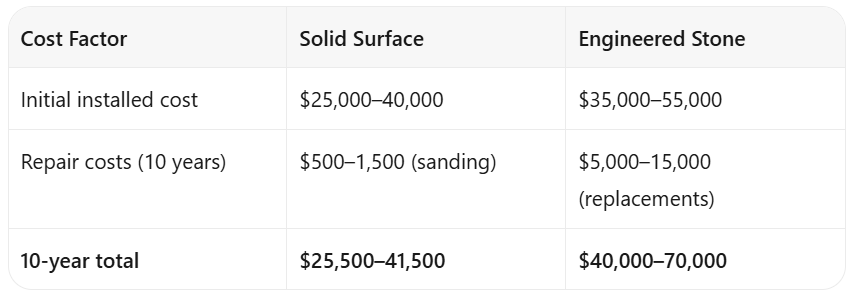
The breakeven point is typically year 3–5. After the first stone surface replacement, solid surface has already paid back its lifecycle advantage.
Q: Which material is more popular for hotel bathrooms right now? A: Solid surface is increasingly preferred for new-build and renovation hotel bathrooms. Many major chains (Marriott, Hilton, IHG) have solid surface in their current brand standards. Engineered stone is more common in residential and some upscale lobbies.
Q: Can engineered stone be used for integrated sinks? A: No. Engineered stone cannot be thermoformed into seamless sink bowls. Undermount sinks are the only option with engineered stone.
Q: Does solid surface scratch more easily in practice? A: Yes, in day-to-day use it acquires light scratches faster than engineered stone. But those scratches are easily sanded out (5–10 minutes of maintenance). Engineered stone doesn't scratch but the scratches it does get (from heavy use) are permanent.
Copyright © Guangdong Wiselink Ltd. -- Privacy Policy
 EN
EN