
A commercial kitchen during peak service is a place of controlled chaos. The salamander broiler is glowing, induction hobs are pulsing, and a line cook has just pulled a cast iron sizzle plate out of a blazing hot oven. They need a surface that can take that plate immediately, without a trivet, without a moment of hesitation. In that split second, the chemistry of the countertop material matters more than the color or the price tag. A residential kitchen counter might only need to tolerate a warm mug of coffee. A commercial counter must survive the repeated, concentrated thermal shock of hotel pans, sheet trays, and stockpots moving directly from the heat source to the work surface. A material that scorches, cracks, or delaminates in this environment is not just an aesthetic failure; it is a workflow obstruction and a safety risk. The first question a restaurant owner or hotel facilities manager must ask is not whether a countertop looks premium, but whether it can absorb that thermal abuse shift after shift without becoming a liability.
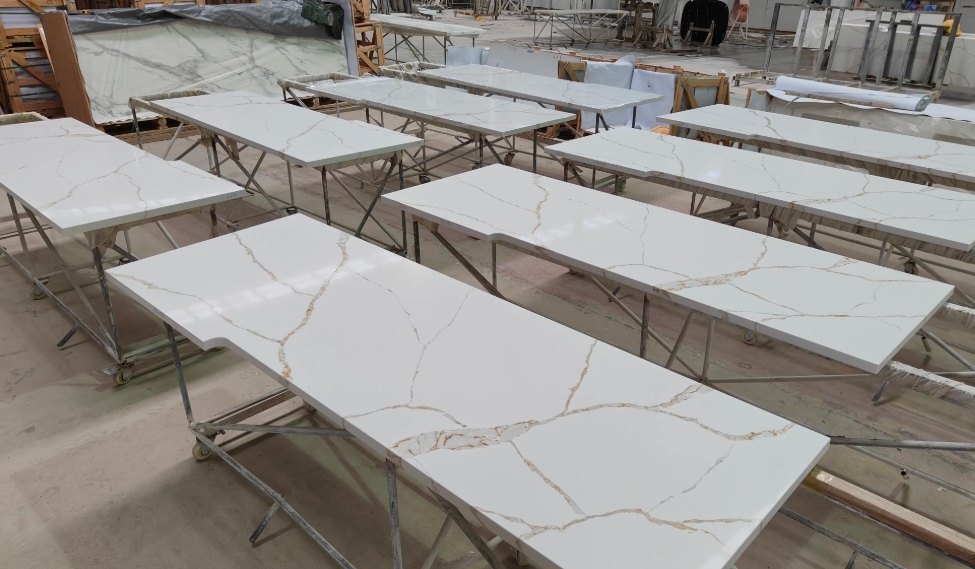
When comparing countertop materials, buyers often look for a single temperature rating on a specification sheet. That number can be deeply misleading. A static heat rating tells you how a material behaves when it is slowly and evenly warmed in a laboratory oven. A commercial kitchen is the exact opposite of that. It delivers thermal shock: a sudden, intense burst of heat applied to a small surface area while the rest of the slab remains cold. This creates a steep temperature gradient that pulls the material apart at the molecular level. Natural granite handles this reasonably well because its crystalline structure formed under extreme geological heat, but even granite can suffer from fissures if water trapped in a micro crack flashes into steam. Engineered quartz, while beautiful and hard, relies on a resin binder that can scorch and permanently discolor under a hot pot placed directly on the surface. Stainless steel dissipates heat rapidly across its entire body, which prevents localized burn marks but can create an uncomfortably hot resting surface until the thermal energy spreads. Solid surface materials based on acrylic or polyester resins occupy a distinct middle ground. They resist scorching up to a practical working limit, and when thermal damage does occur, the burn is usually a shallow surface mark that remains fully repairable rather than a structural crack.
There is a hidden relationship between thermal stress and sanitation that is often overlooked during the specification process. Every heating and cooling cycle causes the countertop to expand and contract by microscopic amounts. If the counter is built from multiple pieces joined with seams, those seams act as expansion joints whether you intended them to or not. Over hundreds of thermal cycles, a gapped seam edge becomes a perfect collection point for proteins, fats, and moisture. In a commercial prep zone, that microscopic reservoir quickly becomes a biological hazard under health inspection standards. This is where the joining technology of the material becomes a hygiene factor. Solid surface sheets, when joined with color matched two part adhesives, create a chemically welded bond that behaves like a single, monolithic sheet. The seam is not a line of filler between two hard edges; it is a fused zone of identical material. When the entire counter expands and contracts uniformly, there are no micro gaps for contamination to settle into. This physical integrity through thermal cycling is one of the key reasons health code enforcement bodies look favorably on seamless, non porous surfaces in commercial food preparation environments.
Commercial kitchen design is governed by a dense framework of standards that extend well beyond aesthetic preference. Fire safety codes often dictate the clearance and surface material specifications around cooking equipment. In many jurisdictions, the surface directly adjacent to a deep fryer or char broiler must be non combustible or at least have a flame spread rating that meets the local building code. Meanwhile, food safety authorities inspect surfaces for cleanability and the absence of physical defects that can harbor bacteria. A countertop material that scores well on heat resistance but develops micro cracks over time will eventually fail a sanitation audit. The most authoritative approach to selecting a heat resistant counter is to work backward from these compliance obligations. Choose a material that meets the non combustible or limited combustibility requirements where necessary, and that provides a seamless, repairable surface across the entire food contact zone. This dual compliance thinking protects the operator from fire code violations and health code demerits simultaneously, which is precisely the kind of operational security a profitable commercial enterprise requires.
Every material has a weakness, and an honest specification conversation must acknowledge them. Stainless steel will scratch, and in a high end hotel open kitchen, those scratches can look tired within a year. Granite requires periodic sealing, and if the sealer is burned off by a hot pan, the stone beneath becomes vulnerable to oil staining that cannot be removed. Engineered quartz cannot be repaired on site if it scorches; a damaged section often requires a full replacement cut. Solid surface materials offer a specific value proposition that makes sense in many commercial settings. A cigarette burn on a hotel bathroom vanity, a scorch mark from a heat lamp on a buffet counter, or a deep scratch from a dropped knife can all be sanded out and refinished by a maintenance technician without removing the counter. This repairability directly reduces the total cost of ownership because it extends the functional life of the installation. The budget discussion should therefore shift from the initial purchase price to the projected cost over a five or ten year service window, factoring in cleaning chemicals, sealer reapplications, and partial replacements.
The performance of a heat resistant countertop is decided not just by its chemical formula but by the manufacturing discipline behind it. A solid surface sheet that leaves the factory with inconsistent resin to filler ratios or incomplete curing will develop weak zones that fail exactly where the heat is highest, usually right next to the cooking equipment. This is why procurement decisions should weigh the supplier's production control as heavily as the material's advertised specifications. Consistent sheet thickness, uniform color dispersion, and verified cure cycles ensure that the thermal data on the technical sheet translates into real kitchen performance without unpleasant surprises. Wiselink operates with a supply chain model that prioritizes this level of manufacturing precision. When a commercial developer or hospitality group specifies solid surface sheets, knowing that every batch is produced under controlled conditions with rigorous quality checks gives the project team confidence that the countertops will handle the heat of service and the scrutiny of health inspectors for years to come.
Copyright © Guangdong Wiselink Ltd. -- Privacy Policy
 EN
EN