
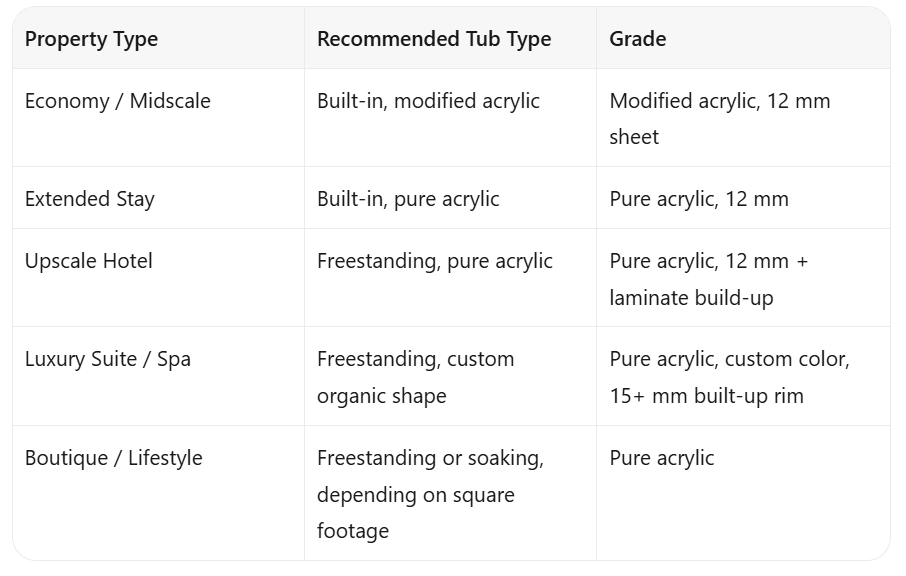
Solid surface bathtubs are gaining ground in hospitality because they combine the warm, non-porous feel of acrylic with the rigidity and color-through consistency of stone — at a lower weight than real stone and without the gel-coat maintenance issues of standard acrylic tubs. Freestanding solid surface tubs anchor luxury bathroom designs; built-in versions maximize space efficiency for midscale and compact rooms. Guangdong Wiselink Ltd. has supplied solid surface sheet to fabricators producing both configurations, and here's what we've learned about each.
Hotel operators have traditionally had three bathtub options:
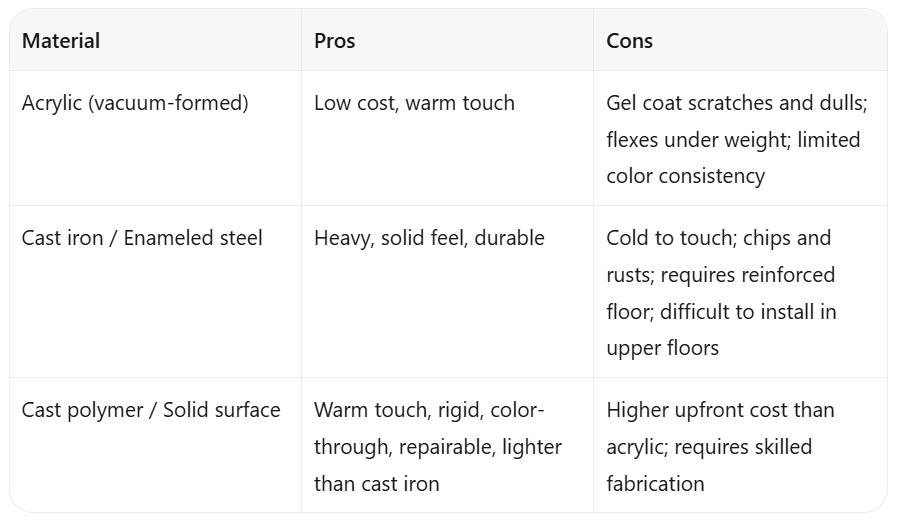
Solid surface tubs bridge the gap: they have the warmth of acrylic, the rigidity of cast polymer, and the repairability that neither offers. A scratched solid surface tub sands out in minutes. A scratched acrylic tub is a replaced tub.
Freestanding tubs are the centerpiece of the bathroom. They're not tucked into an alcove — they sit on the floor as a sculptural element.
Solid surface advantages for freestanding tubs:
Installation considerations:
Typical dimensions: 1500–1800 mm long, 700–800 mm wide, 550–650 mm deep
Built-in tubs are installed into a framed enclosure with tile or solid surface surround. They're more common in midscale and extended-stay hotels where space efficiency matters.
Solid surface advantages for built-in tubs:
Installation considerations:
Typical dimensions: 1400–1700 mm long, 700–750 mm wide, 450–500 mm deep (shallower than freestanding)
A growing trend in hotels — particularly in Asia-influenced designs and spa suites — is the deep soaking tub. These are smaller in footprint (1200–1500 mm long) but significantly deeper (600–700 mm water depth).
Solid surface is ideal for soaking tubs because the material's thermal properties keep the water warm longer than acrylic. The thermal conductivity of solid surface is lower than stone or metal, which means the tub absorbs less heat from the bathwater. Guests get a longer warm soak.
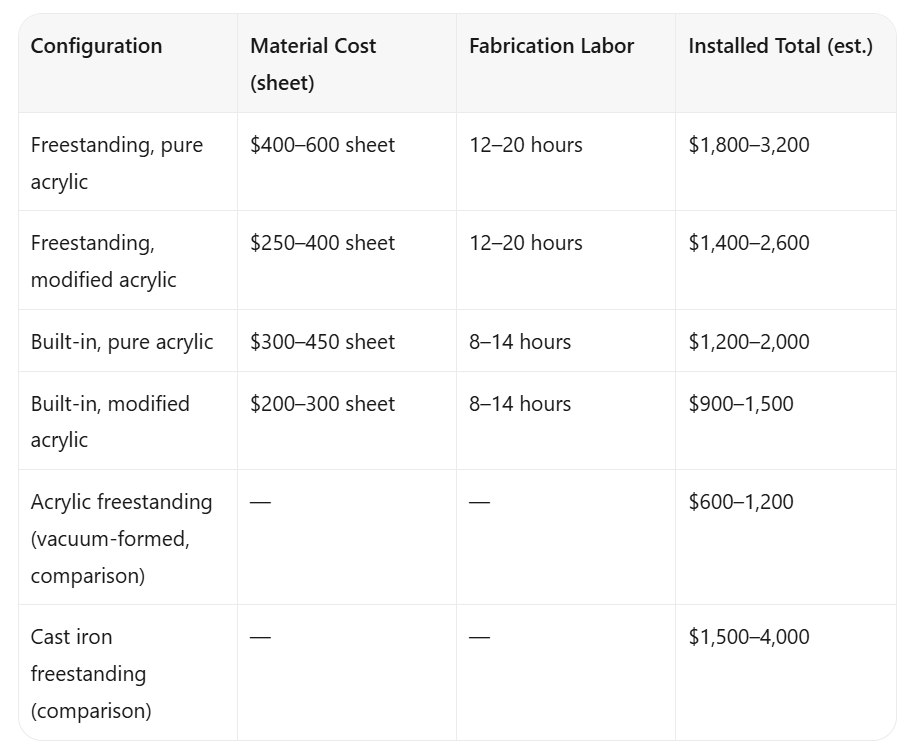
The installed cost of a solid surface bathtub is higher than a mass-produced acrylic tub but lower than premium cast iron. The tradeoff is repairability and longevity: a solid surface tub can be refinished multiple times over its life; an acrylic tub with a failed gel coat must be replaced.
Q: Are solid surface bathtubs heavy? A: Solid surface tubs weigh roughly 20–30% of cast iron and 60–70% of cast polymer. A typical freestanding solid surface tub weighs 80–120 kg — manageable for upper-floor installation without structural reinforcement, but still a two-person lift.
Q: Can solid surface tubs be repaired in place? A: Yes. Scratches, dull spots, and minor gouges can be sanded out in place by a maintenance technician. Deeper damage may require a solid surface fabricator for a patch repair. In all cases, repair is done without removing the tub — no demolition, no floor damage.
Q: How does the finish hold up to cleaning chemicals? A: Solid surface resists hotel-grade bathroom cleaners. Avoid abrasive scouring pads (Scotch-Brite is fine; steel wool is not). For heavy mineral buildup from hard water, use diluted vinegar or a commercial descaler approved for acrylic surfaces.
Q: Does Wiselink manufacture bathtubs? A: Guangdong Wiselink Ltd. primarily manufactures solid surface sheets. Our sheets are used by bathtub fabricators who thermoform and laminate them into finished tubs. We can recommend fabrication partners for specific project needs.
Copyright © Guangdong Wiselink Ltd. -- Privacy Policy
 EN
EN