
Three materials dominate the commercial waterproof wall panel market: solid surface, FRP (fiber-reinforced plastic), and acrylic (vacuum-formed sheet). Each has a different price point and performance profile. Solid surface is the premium option that offers seamless looks and repairability. FRP is the budget champion. Acrylic sits in between.
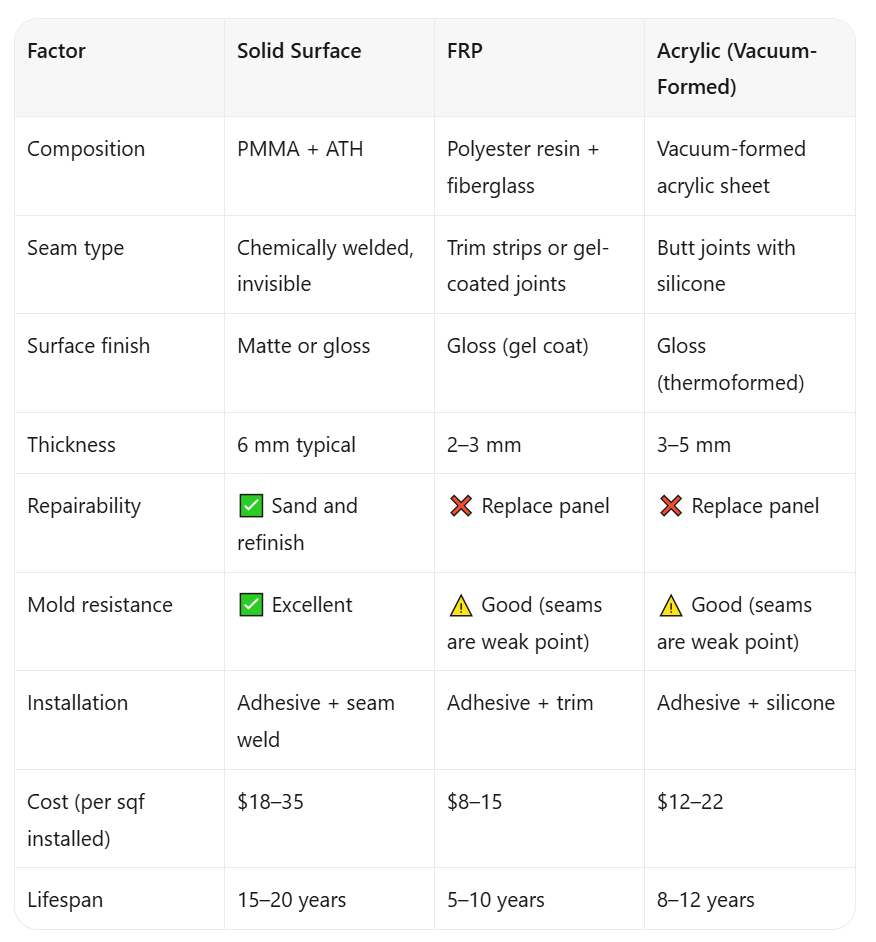
Solid surface wall panels are the most expensive upfront but provide the longest service life and the best maintenance profile. The chemically welded seams remain invisible and waterproof indefinitely. The material can be sanded and refinished multiple times.
Best for: Hotels, senior living, healthcare — anywhere the building will be operated for 15+ years and maintenance cost matters more than first cost.
FRP is widely used in affordable housing, student housing, and renovation projects where speed and cost are the primary constraints. FRP panels install quickly with adhesive and aluminum trim strips at the seams.
Limitations: The seams are the weak point — trim strips collect dirt and can separate from the panel over time. The gel coat surface scratches and dulls. Once damaged, FRP panels must be replaced, not repaired. Typical lifespan in commercial shower use is 5–10 years.
Acrylic shower wall panels (often sold as "acrylic surround" or "bath wall" systems) offer a middle ground. They're warmer to the touch than FRP and come in gloss finishes that mimic solid surface at half the cost.
Limitations: Seams are silicone-caulked, not welded — they require annual maintenance. The vacuum-formed surface can delaminate in high-heat conditions. Acrylic panels are thinner and can flex, feeling less solid under hand pressure.
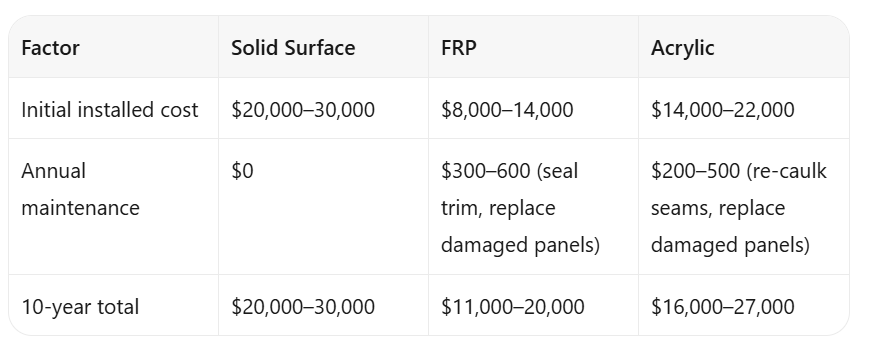
At year 5–7, the maintenance costs of FRP and acrylic begin to offset their initial savings. At year 10, solid surface may be the lowest total cost in high-use environments.
Q: Can FRP be installed over existing tile? A: Yes. FRP is thin and flexible enough to install over well-bonded tile with adhesive. This is a common renovation shortcut.
Q: Which material is easiest for hotel maintenance staff to repair? A: Solid surface. Scratch repair requires a sanding pad. FRP and acrylic damage require panel replacement.
Q: Are there fire rating differences? A: All three can meet ASTM E84 Class A with proper formulation. Verify each product's test report — not all FRP grades are Class A, especially budget products.
Copyright © Guangdong Wiselink Ltd. -- Privacy Policy
 EN
EN