
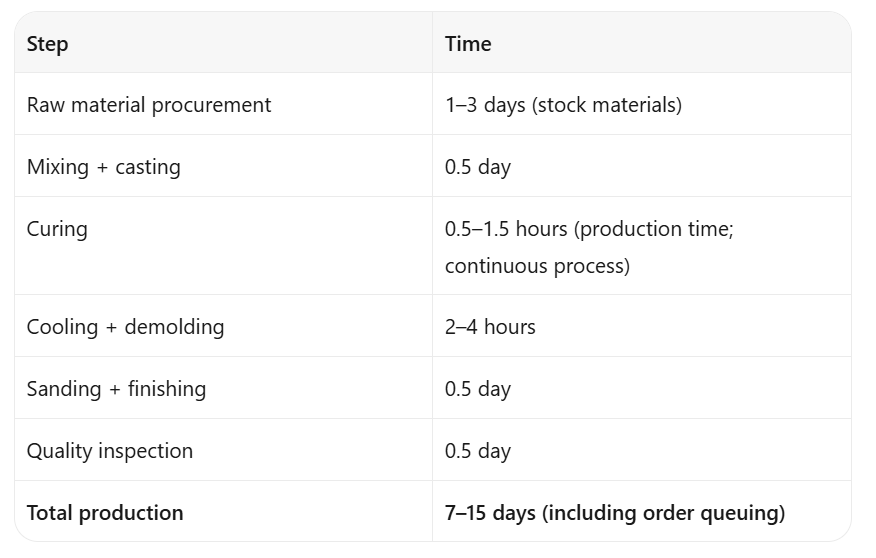
திட மேற்பரப்பு தகடு எவ்வாறு தயாரிக்கப்படுகிறது என்பதைப் புரிந்துகொள்வது, வாங்குபவர்களுக்கு வழங்குநர்களை மதிப்பீடு செய்வதிலும், நியாயமான விநியோக நேரத்தை எதிர்பார்வதிலும், தரத்தைக் குறிக்கும் அடையாளங்களை அடையாளம் காண்வதிலும் உதவுகிறது. இந்த செயல்முறையில் ஆறு முக்கிய படிகள் உள்ளன: மூலப்பொருள் கலப்பு, வார்ப்புரு ஊற்றுதல், வினையூட்டுதல், வார்ப்புருவிலிருந்து வெளியே எடுத்தல், தேய்த்தல்/முடிவு செய்தல் மற்றும் தர ஆய்வு. ஒவ்வொரு படியும் இறுதி தகட்டின் தரத்தை பாதிக்கிறது.
இச்செயல்முறை இரண்டு முக்கிய பொருட்களிலிருந்து தொடங்குகிறது:
கூடுதல் கூறுகளில் சாயங்கள் (நிறத்திற்காக), வினையூட்டிகள் (வினையூட்டுதலைத் தூண்டுவதற்காக), விடுவிப்பான்கள், UV நிலைப்படுத்திகள் மற்றும் குறிப்பிட்ட பண்புகளுக்கான சேர்மங்கள் (எதிர்-நிலைமின்னூட்டம், எதிர்-பாக்டீரியல்) ஆகியவை அடங்கும்.
பொருள்கள் எடையிடப்பட்டு, தொகுதிகளாக தனியாக தயாரிக்கப்பட்டு, ஒரு சீரான கலவை உருவாகும் வரை உயர்-சீயர் கலப்பானில் கலக்கப்படுகின்றன. கலக்கும் நேரம் மற்றும் வெப்பநிலை நிறத்தின் ஒருவகைத்தன்மை மற்றும் காற்று இடைவெளிகள் உருவாதலை பாதிக்கின்றன.
திரவக் கலவை வார்ப்பு கலன்களில் ஊற்றப்படுகிறது. இரண்டு முறைகள்:
தொகுதி வார்ப்பு: கலவை கிடைமட்ட வார்ப்பு வரிசையில் தனித்தனியாக வார்ப்பு சட்டங்களில் (பொதுவாக 3050×760 மிமீ அல்லது 3680×760 மிமீ) ஊற்றப்படுகிறது. ஒவ்வொரு வார்ப்பு கலனும் காற்று குமிழிகளை வெளியேற்ற அதிர்வுக்கு உள்ளாக்கப்படுகிறது.
தொடர் வார்ப்பு: கலவை இரண்டு கொண்டுசெல்லும் திரைகளுக்கு இடையில் இயங்கும் பெல்ட்டின் மீது ஊற்றப்படுகிறது. இந்த முறை நீளமான தகடுகளை உற்பத்தி செய்கிறது, ஆனால் பாகுத்தன்மையை மிகுந்த துல்லியமாக கட்டுப்படுத்த வேண்டும்.
வைஸ்லிங்க் தரமான தகடு அளவுகளுக்கு தொகுதி வார்ப்பு முறையை பயன்படுத்துகிறது — இது தடிமன் சீர்த்தன்மை மற்றும் மேற்பரப்பு முறையில் சிறந்த தரக் கட்டுப்பாட்டை வழங்குகிறது.
நிரப்பப்பட்ட வார்ப்பு கலன்கள் உறைதல் அடுப்பு அல்லது சுரங்கத்திற்குள் செல்கின்றன. உறைதல் சுழற்சி திரவ பாலிமர் பொருளை பாலிமரைசேஷன் மூலம் திட தகடாக மாற்றுகிறது.
சிகிச்சை அளவுகள்:
தூய அக்ரிலிக் பொருளுக்கு, மாற்றப்பட்ட அக்ரிலிக் பொருளை விட நீண்ட மற்றும் மிகவும் கவனமாகக் கட்டுப்படுத்தப்பட்ட சிகிச்சை தேவை. விரைவான சிகிச்சை உள் வடிவ மன அழுத்தத்தை ஏற்படுத்தி, வளைதல் அல்லது நுண்ணிய பிளவுகளாக வெளிப்படும்.
சிகிச்சைக்குப் பிறகு, வடிவத்திலிருந்து வெளியே எடுக்கும் முன் தகடு குளிர வேண்டும். விரைவான குளிர்விப்பு வெப்ப அதிர்ச்சியையும், வளைதலையும் ஏற்படுத்தும். பொதுவாக, தகடுகளை 2–4 மணி நேரத்திற்கு அறை வெப்பநிலைக்கு குளிர விடுவார்கள்.
வடிவத்திலிருந்து வெளியே எடுத்த பிறகு, தகட்டின் பின்புறம் மேற்பரப்பு மோசமாக இருக்கலாம் (வடிவத்தின் காரணமாக), முன்புறம் மேற்பரப்பு மென்மையாக இருக்கும் (கொண்டு செல்லும் திரையின் காரணமாக).
தகடு பல தலைகளைக் கொண்ட தேய்த்தல் வரியின் வழியாகச் செல்கிறது:
மணல் தேய்த்தலுக்குப் பிறகு 12 மிமீ தகட்டின் தடிமன் துல்லியம் ±0.2 மிமீ ஆக இருக்க வேண்டும். உயர் தர தயாரிப்பாளர்கள் கண்டிப்பான துல்லியத்தை பராமரிக்கின்றனர்.
ஒவ்வொரு தகடும் பின்வருவனவற்றிற்காக ஆய்வு செய்யப்படுகிறது:
வைஸ்லிங்க் தகடுகளை தொகுதி எண் மற்றும் ஆய்வுச் சான்றிதழுடன் அனுப்புகிறது; இது உற்பத்தி தேதி மற்றும் திருப்பம் ஆகியவற்றுடன் தட்டச்சு செய்யக்கூடியதாகும்.
கே: நல்ல தயாரிப்பாளரை மோசமான தயாரிப்பாளரிலிருந்து வேறுபடுத்துவது என்ன? ப: மூன்று விஷயங்கள்: (1) தடிமன் துல்லியம் — நல்ல தயாரிப்பாளர்கள் ±0.2 மிமீ அல்லது அதற்கு மேற்பட்ட துல்லியத்தை பராமரிக்கின்றனர், (2) உற்பத்தி ஓட்டங்கள் முழுவதும் நிற ஒழுங்கு, மற்றும் (3) மாதிரி சோதனை அடிக்கடி — தரமான தயாரிப்பாளர்கள் மாதிரிகளை தொகுதிக்கு சோதிக்கின்றனர், மாதத்திற்கு ஒருமுறை அல்ல.
கே: சிறிய அளவில் தனிப்பயன் நிறங்களை உருவாக்க முடியுமா? ப: தனிப்பயன் நிறங்களை உருவாக்குவதற்கு ஆய்வக வடிவமைப்பு மற்றும் தனிப்பயன் உற்பத்தி வரிசையை சுத்தம் செய்வது தேவை. செலவு நன்றாக இருக்கும் வகையில் தனிப்பயன் உற்பத்திக்கு பொதுவாக குறைந்தபட்சம் 100+ தகடுகள் தேவை.
கே: ஒரு தயாரிப்பாளரின் தர கூற்றுகளை எவ்வாறு சரிபார்ப்பது? ப: கோருங்கள்: தயாரிப்பு தரவு தாள் (ASTM/ANSI சோதனை முடிவுகளுடன்), உற்பத்தி வரிசையின் புகைப்படங்கள், தர கட்டுப்பாட்டு ஆவணங்கள் மற்றும் தற்போதைய உற்பத்தி ஓட்டத்திலிருந்து மாதிரிகள். ஒரு நடைமுறை வீடியோ சுற்றுப்பயணமும் நம்பகத்தன்மையை குறிக்கும் வலுவான அடையாளமாகும்.
Copyright © Guangdong Wiselink Ltd. -- தனியுரிமைக் கொள்கை
 EN
EN